
· 7 min read
Mixpanel integration for iOS & Android: track, analyze, grow
Product analytics for mobile teams: SDK setup, event taxonomy, funnels, retention, and revenue tracking on iOS and Android, without polluting the codebase.
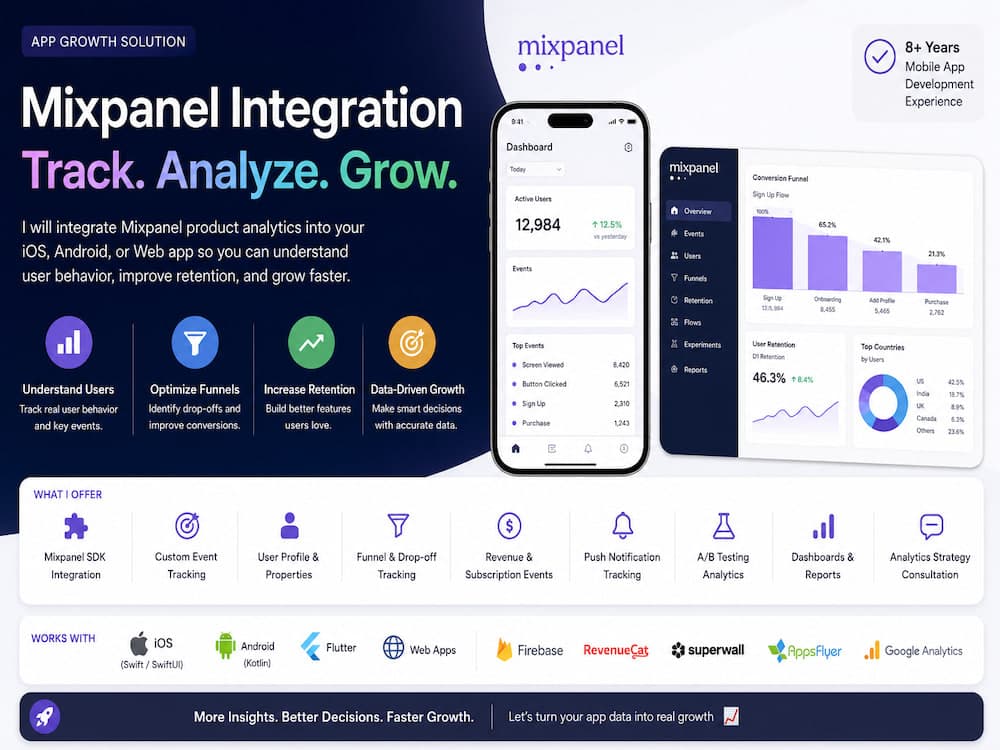
If you ship a mobile app without structured analytics, every product decision becomes a guess. Mixpanel gives event-level visibility into what users actually do (sign-up funnels, feature adoption, retention cohorts, and revenue) so you can fix drop-offs and double down on what works.
A solid integration is more than dropping in the SDK. You need a naming convention for events and properties, identity rules (anonymous to logged-in), and parity between iOS and Android so dashboards compare the same product. Start with a short analytics spec: north-star metric, five to ten core events, user profile fields, and which funnel you need in the first sprint.
What teams usually need maps to growth: Mixpanel SDK on Swift/SwiftUI and Kotlin, custom event tracking, user profiles and super properties, funnel and drop-off analysis, subscription and revenue events (often with RevenueCat or StoreKit), push attribution, and dashboards the team can use without a data scientist.
Mixpanel also plays well with the rest of the stack (Firebase for auth and remote config, AppsFlyer for acquisition, Superwall for paywalls) when you define clear boundaries: which tool owns installs, which owns in-app behavior, and how IDs are stitched after login.
Whether you are launching an MVP or cleaning up years of ad-hoc logging, the goal is the same: trustworthy data, fast time-to-insight, and an implementation engineers can maintain. Shayopra does end-to-end Mixpanel setup, event design, and validation against live builds on both platforms.